
If you enjoy logic puzzles where numbers tell you what you cannot see, such as Minesweeper, Nonograms or Kakuro, Labyrinth: The Lantern Secret works the same part of your brain in a new way. Here is an honest comparison.
What it shares with Minesweeper
- Something is hidden, and numbers point to it. In Minesweeper it is mines; in Labyrinth it is the walls between the tiles.
- You deduce instead of guessing. Each number limits where the hidden things can be, and two or three numbers together often settle a question for certain.
- You note what you have worked out. Minesweeper has flags; Labyrinth has your own walls and dotted marks.
- A wrong move costs you. In Minesweeper a mine ends the game; in Labyrinth a bump costs one of three hearts.
What is different
The biggest difference is what a number counts. In Minesweeper a number counts the mines among the eight cells around it. In Labyrinth a number counts how many tiles you can see from it, straight up, down, left and right, as far as the first wall.
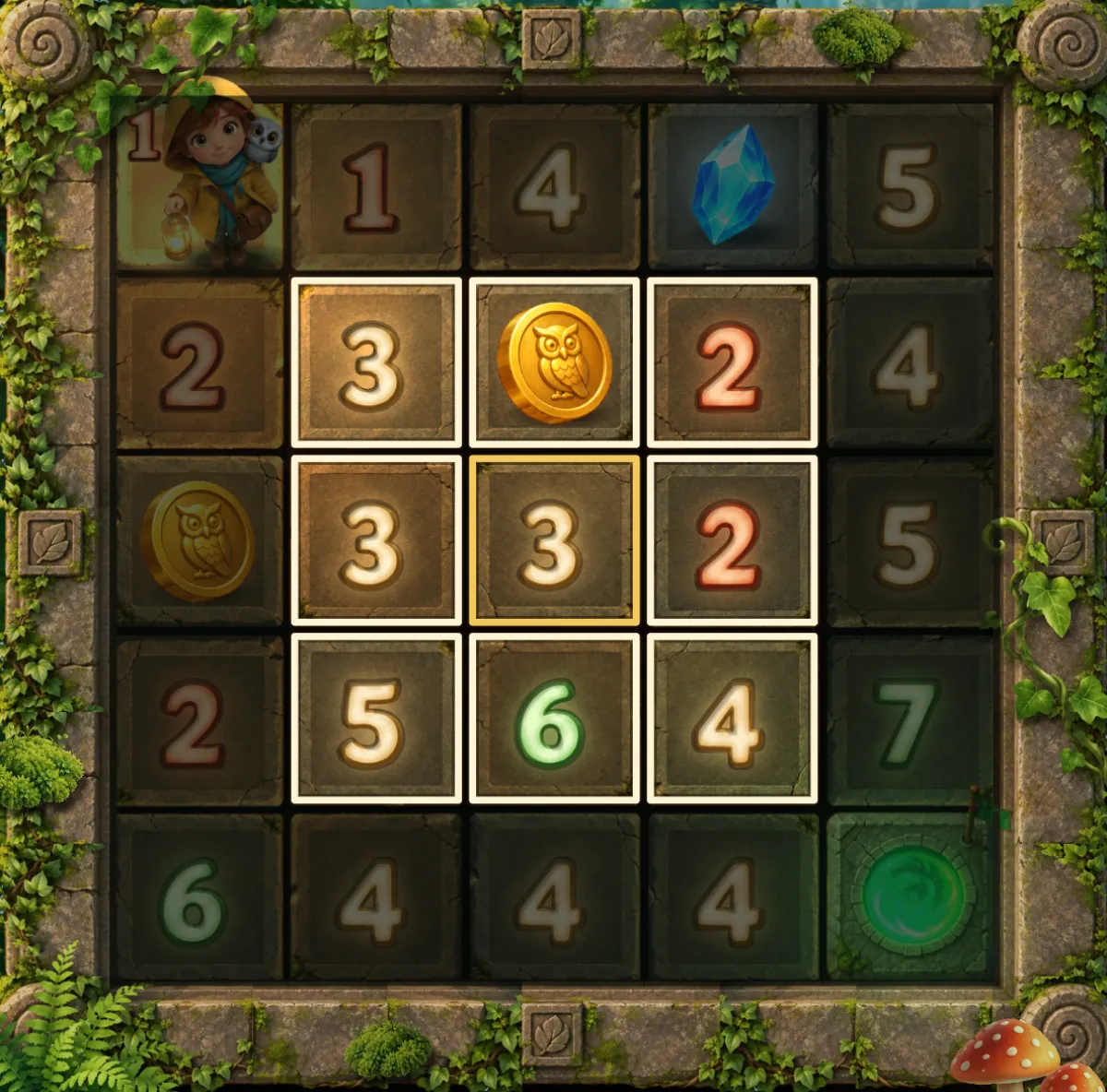
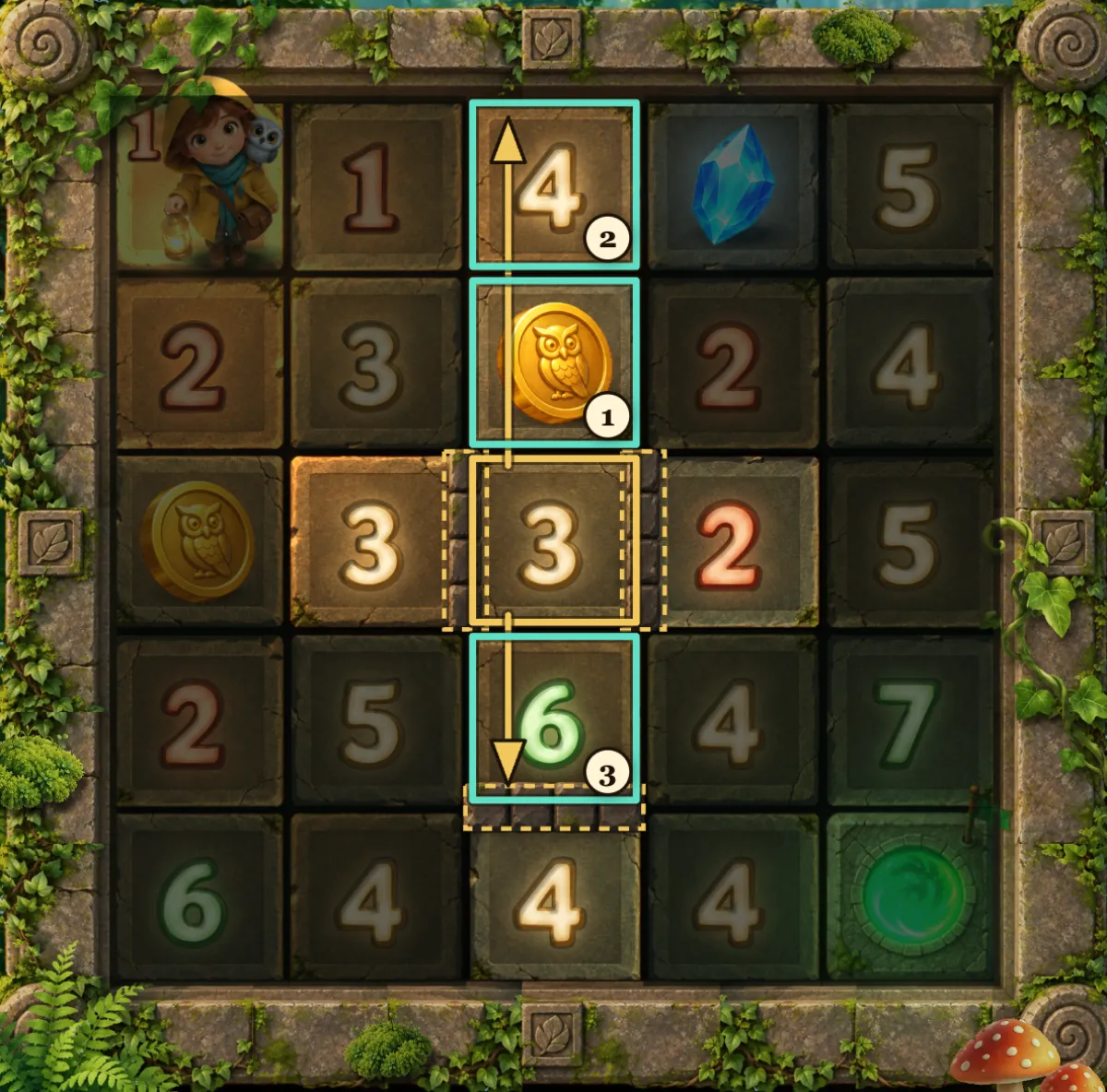
So a number can reach across the whole board: a 7 on a 5×5 board tells you about tiles four steps away. And you are not opening cells from above; you walk a hero through the maze, one tile at a time, and the goal is the exit.
| Minesweeper | Nonograms | Kakuro | Labyrinth | |
|---|---|---|---|---|
| What is hidden | Mines in cells | Which cells are filled | Digits in the white cells | Walls between tiles |
| What a number tells | Mines among the 8 neighbours | The runs of filled cells in a row or column | The sum of a run of digits | Tiles seen in 4 straight lines, up to the first wall |
| What you do | Open cells, flag mines | Fill and cross out cells | Write digits | Walk to the exit, mark walls |
| A mistake | A mine ends the game | A wrong picture to undo | A sum that does not fit | A bump costs one of three hearts |
| Extra goals | None | None | None | Crystals, keys, braziers, step limits |
No guessing needed
Some deduction puzzles leave you, now and then, with a choice no number can settle. Labyrinth is built not to: when the game makes a maze, its own solver checks that all of its walls can be worked out from the numbers alone, even with the numbers hidden under items and under the exit. If you are stuck, there is a deduction you have not found yet, and a hint can open one border to get you going.
Who will like it
- Fans of Minesweeper, Nonograms, Kakuro and logic grid puzzles who want a new kind of clue.
- Children: the rules fit in two sentences, the first level is a guided tutorial, and the art is a fairy tale of floating islands. Adults get 7×7 mazes with step limits on the volcano.
- People who like a daily puzzle: the Daily Maze is the same for everyone, with one timed try and a leaderboard.
Labyrinth: The Lantern Secret is for iPhone and iPad, free to play, and coming soon to the App Store. Start with the rules, or see the deduction in action in reading the numbers.